For years, industrial automation followed predefined logic.
Controllers executed fixed programs based on input signals.
Today, this approach is changing.
Physical AI combines:
artificial intelligence
industrial automation
machine vision
real time data analysis
Machines are no longer limited to executing static logic.
They can analyze situations and adapt decisions based on process data.
Examples include:
AI based quality inspection
adaptive robot control
real time anomaly detection
dynamic process optimization
Modern systems integrate:
Edge AI
Digital Twin
machine learning
vision systems
The biggest shift is flexibility.
Systems react to real production conditions instead of relying only on predefined rules.
This is especially important in:
high mix production
flexible manufacturing
complex industrial processes
Physical AI is becoming one of the fastest growing trends in industrial automation.
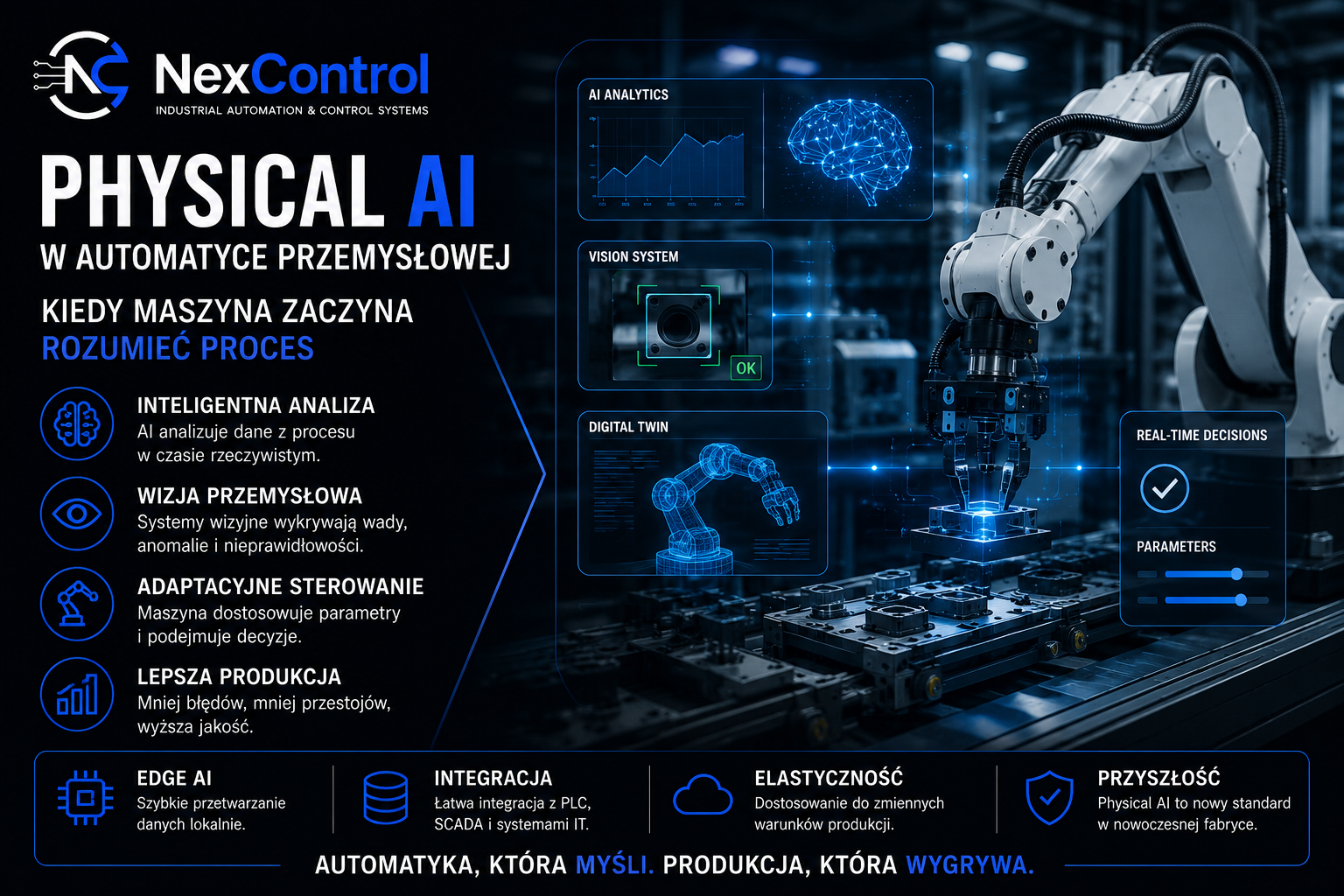
Physical AI in industrial automation when machines start understanding processes
Industrial automation is evolving beyond fixed logic. Physical AI combines AI, vision systems and automation into intelligent production systems.