Is the cloud always necessary in industrial automation?
In many projects, the topic of cloud solutions comes up more and more often. Machine data is sent to IT systems, dashboards, and analytics platforms. This is a natural direction of development, but in practice it’s not always the best solution for every process.
The problem arises when all data must be sent to the cloud and decisions depend on external connectivity. Delays, unstable connections, or security limitations can impact system performance and response time.
Edge computing – processing data where it is generated
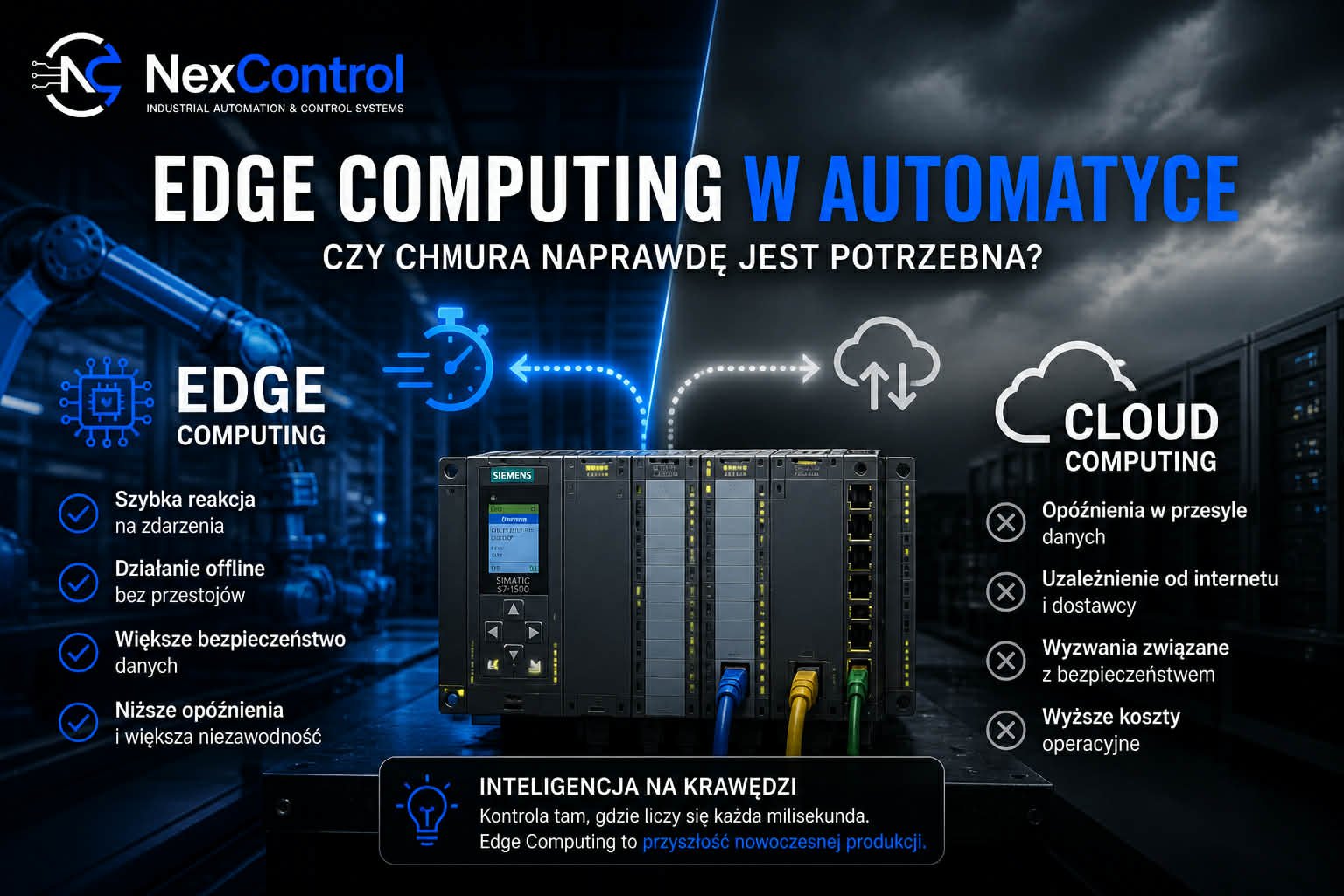
Edge computing means processing data directly at the machine level or within local infrastructure. This allows critical operations to be handled in real time, without sending everything to the cloud.
This approach enables faster responses, reduces network load, and increases system independence.
Not everything needs to go to the cloud
In practice, the key is to distinguish which data is needed locally and which should be analyzed globally. Data critical for control and safety should be processed on-site, while historical data, reports, and analytics can be sent to the cloud.
Without this balance, systems often become unnecessarily complex and more expensive.
Balancing Edge and Cloud
The best results come from combining both approaches. Edge handles fast decision-making and operational stability, while the cloud supports analytics, reporting, and long-term optimization.
At NexControl, we take a practical approach — designing architectures that fit the process, not just trends. Because technology should support production, not complicate it.
If you’re wondering how to approach data in your system, it’s worth analyzing it early — before system limitations start affecting performance and growth.
Edge Computing in Automation – Is the Cloud Really Necessary?
Do all data really need to go to the cloud? Edge computing allows local processing and faster response. See when it makes real sense in automation.