Why is machine safety still often treated as an add-on?
In many facilities, safety systems are implemented only when required by an audit, modernization, or after an incident. Until then, production is the priority, and safety is pushed aside. The problem appears when the lack of proper solutions starts to impact people, machines, and production continuity.
Safety should not be a reaction — it should be part of the design from the very beginning.
A well-designed safety system is the foundation of stable production
Safety systems are not just about components, but about the overall approach to machine design. Risk assessment, proper solution selection, compliance with standards, and integration with PLC and HMI determine whether the system works effectively in practice.
The key is to make safety clear, predictable, and easy to maintain.
Lack of standards increases risk and costs
Unstructured safety systems, missing documentation, or inconsistent solutions extend reaction times and make diagnostics more difficult. In critical situations, this means higher risk, longer downtime, and increased costs.
A well-designed safety system minimizes these issues and improves overall process control.
Safety that supports production
Modern safety systems not only protect but also improve efficiency. Faster response to issues, better diagnostics, and compliance with standards all contribute to stable and predictable production.
At NexControl, we take a practical approach to safety — designing solutions that are not only compliant but also effective in real-world conditions. Because safety is not a cost — it’s an investment in stability and growth.
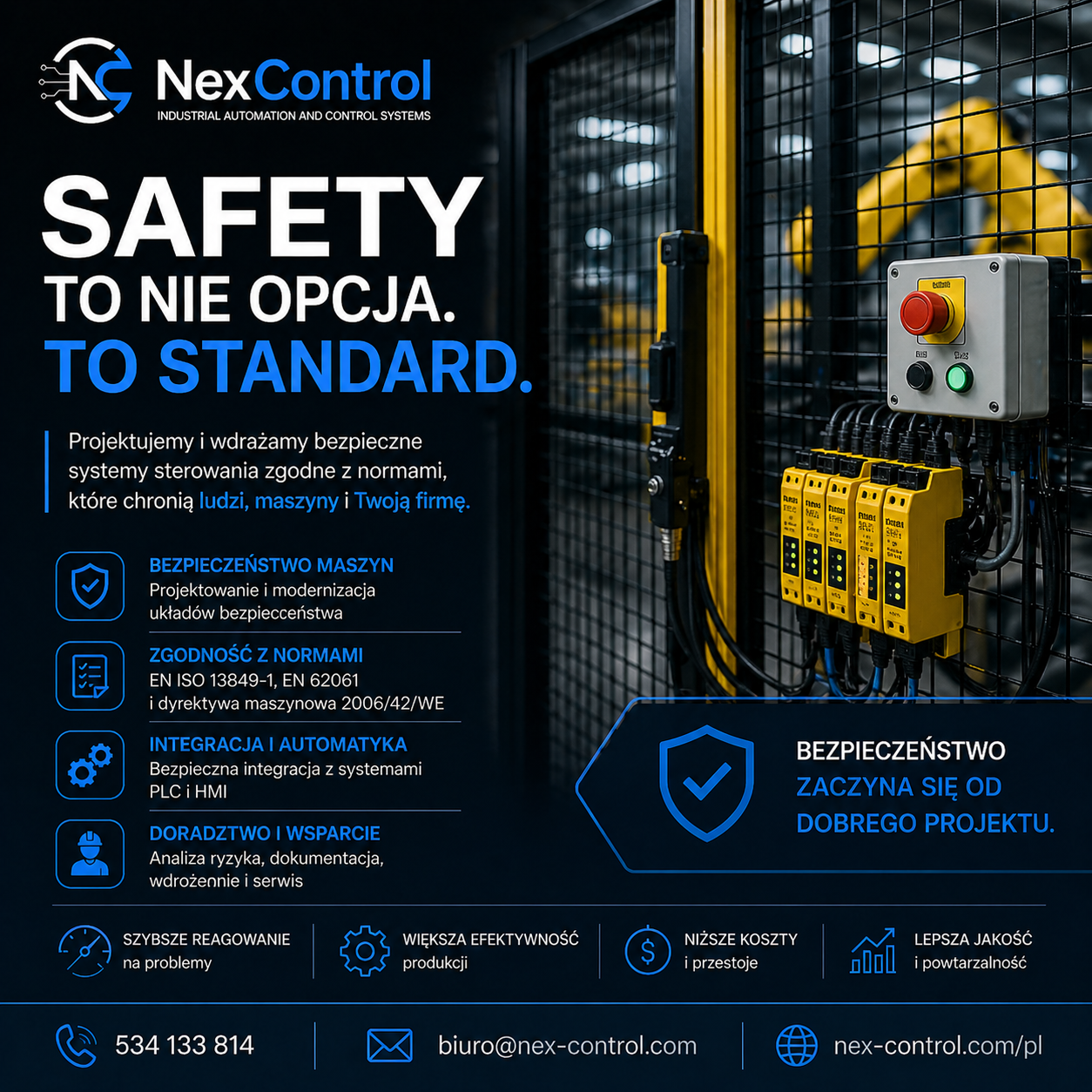
Safety Without Compromise
Modern safety is not just about protection it also means better diagnostics and faster response to issues. This makes production more predictable and easier to manage. Safety starts with a well-designed system.